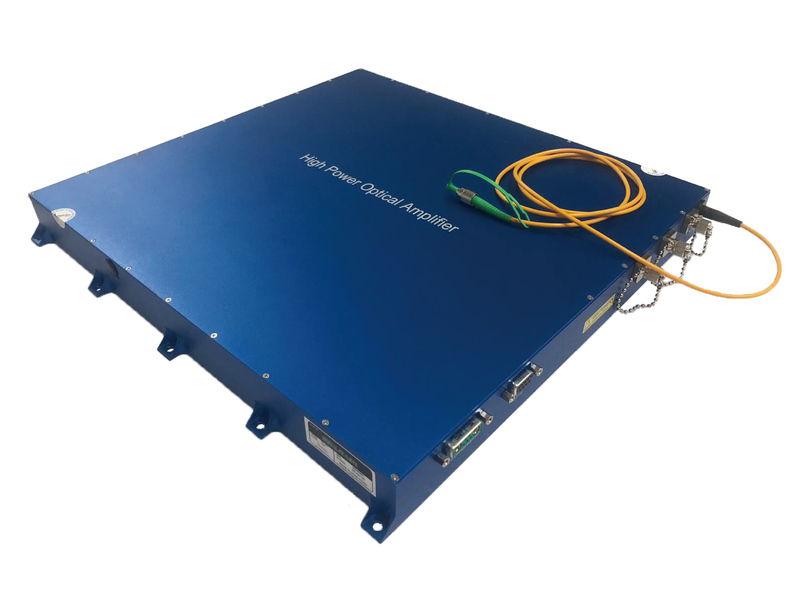
AI Data Center Optical Networks: The Role of High-Power EDFA in 800G and 1.6T DCI
The Hidden Backbone of AI: Optical Networks at Scale
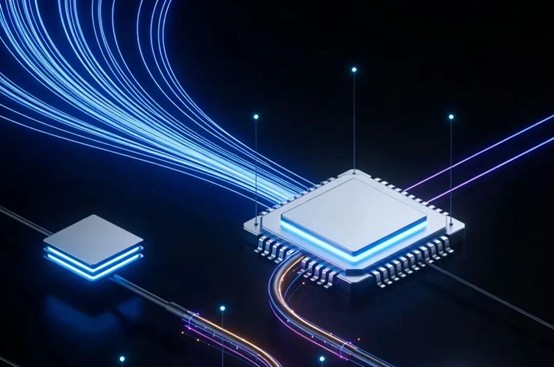
As artificial intelligence evolves from large-scale models to highly efficient and powerful systems, the underlying infrastructure is undergoing a critical transformation.
The rise of advanced AI models—driven by large-scale training and real-time inference—has led to an exponential increase in compute demand. Behind this growth lies a less visible but essential component: data center optical networks.
Modern AI workloads rely heavily on high-speed data transmission between GPUs, storage systems, and distributed data centers. As a result, optical communication networks have become the backbone of AI infrastructure, enabling scalable and efficient compute performance.
AI Compute Growth and Data Center Network Challenges
AI-driven data centers impose significantly different requirements compared to traditional cloud infrastructure.
Key challenges include:
1. Massive GPU Cluster Interconnect
AI training clusters often consist of thousands to tens of thousands of GPUs. These systems require:
- Ultra-high bandwidth
- Deterministic low latency
- High synchronization efficiency
Even minor network delays can significantly impact overall training performance.
2. Inter-Data Center Data Synchronization
Large AI models require continuous data exchange across geographically distributed locations. This includes:
- Training datasets
- Model checkpoints
- Real-time inference updates
Efficient data center interconnect (DCI) is essential to maintain system consistency and performance.
3. Geo-Distributed Compute Architectures
With the rise of distributed computing strategies, AI workloads are increasingly deployed across multiple regions.
This creates new demands for:
- High-capacity backbone optical networks
- Long-distance transmission stability
- Dynamic bandwidth scalability
Evolution of Data Center Interconnect (DCI): From 400G to 1.6T
To support these requirements, DCI optical networks are rapidly evolving in transmission speed:
- 400G → Current mainstream deployment
- 800G → Rapid scaling phase
- 1.6T → Next-generation optical network standard
However, increasing transmission speed introduces fundamental physical limitations.
Why Optical Power Becomes a Bottleneck in High-Speed Networks
As optical data rates increase, receiver sensitivity decreases, making systems more vulnerable to signal degradation and noise.
This leads to several critical challenges:
- Reduced transmission distance
- Increased bit error rates
- Lower system reliability
To overcome these limitations, optical systems must ensure:
- Sufficient optical launch power
- Effective compensation of fiber attenuation
- Stable signal quality over long distances
👉 This makes high-power optical amplification a key enabling technology for high-speed DCI networks.
What is EDFA and Why It Matters in Optical Communication
Erbium-Doped Fiber Amplifier (EDFA) is one of the most widely used technologies in modern optical communication systems.
Unlike electrical amplification, EDFA directly amplifies optical signals without optical-electrical conversion, making it highly efficient for high-speed transmission.
Key Advantages of EDFA
- High gain and output power
- Low noise figure
- Compatibility with DWDM systems
- Proven reliability in large-scale deployments
Typical Applications
- Long-haul optical transmission
- Data center interconnect (DCI)
- DWDM optical networks
- Optical testing and measurement systems
EDFA plays a critical role in maintaining signal integrity across long distances, especially in high-speed optical networks.
Key Requirements for Optical Amplifiers in Modern Networks
As optical networks move toward 800G and 1.6T, the performance requirements for EDFAs are becoming more demanding.
Modern optical amplifiers must provide:
- Higher output power to extend transmission reach
- Lower noise to preserve signal quality
- Wide wavelength range for DWDM scalability
- High stability and reliability for continuous operation
These factors directly impact the performance and scalability of AI data center networks.
Hollow-Core Fiber: The Future of Optical Communication
Hollow-Core Fiber (HCF) is emerging as a promising technology for next-generation optical communication networks.
Unlike conventional fiber, HCF guides light through an air-filled core, offering several advantages:
- Ultra-low latency transmission
- Reduced nonlinear optical effects
- Potential for higher bandwidth capacity
These features make HCF particularly attractive for:
- High-performance data center interconnect
- AI-driven infrastructure
- Ultra-fast optical communication systems
Challenges of Optical Amplification in HCF Systems
Despite its advantages, HCF introduces new technical challenges for optical systems:
- Increased sensitivity to coupling efficiency
- Higher requirements for optical power stability
- Greater system complexity in amplification design
As a result, specialized optical amplification solutions are required to support HCF-based systems.
High Power EDFA Solutions for DCI and Fiber Research
To address the evolving demands of AI infrastructure and next-generation optical networks, we offer high-performance EDFA solutions designed for both industrial deployment and advanced research.
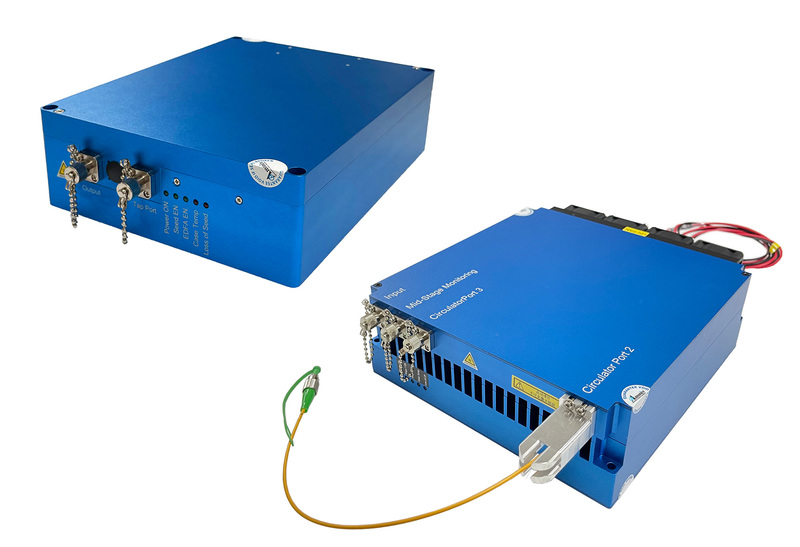
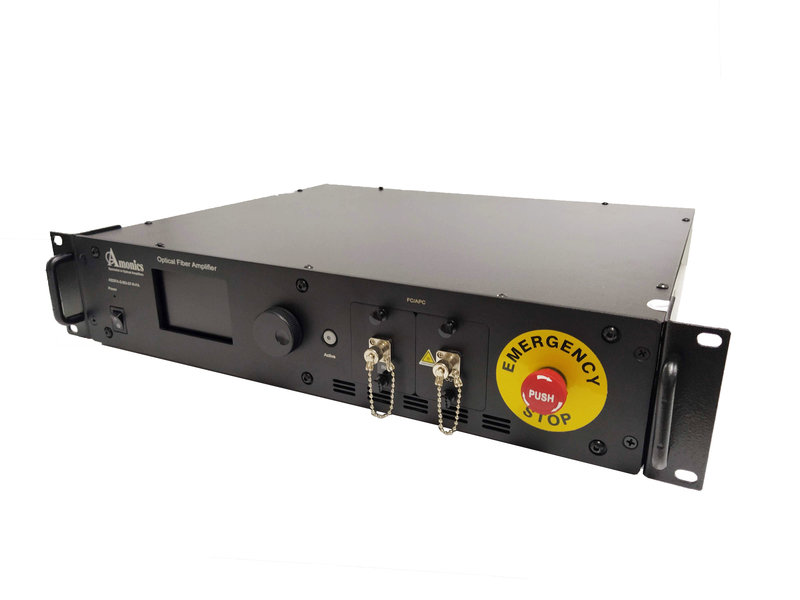
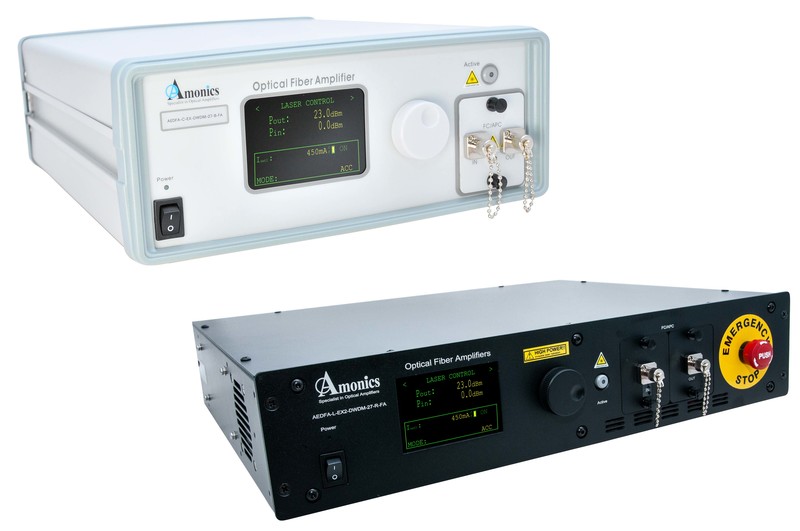
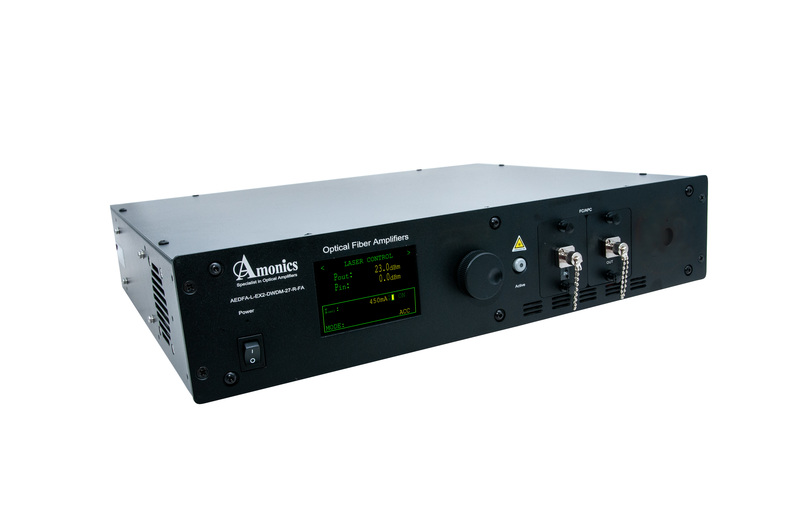
High Power EDFA
Our high-power EDFA is optimized for demanding optical environments, delivering:
- Stable high output power
- Low noise amplification
- Long-term operational reliability
Applications include:
- Long-distance optical transmission
- DWDM network testing
- High-speed optical link experiments
EDFA for Hollow-Core Fiber Research
We also provide EDFA solutions specifically designed for hollow-core fiber applications, enabling:
- Stable amplification for HCF systems
- Support for ultra-high-speed experiments
- Reliable performance in advanced research environments
Ideal for:
- Hollow-core fiber transmission research
- Next-generation optical communication testing
- Experimental fiber network development
Conclusion: Optical Amplification Powers the Future of AI Infrastructure

As AI models continue to scale and compute demand accelerates, data center infrastructure is entering a new phase of evolution.
Future optical networks will require:
- Higher bandwidth (800G / 1.6T and beyond)
- Lower latency
- Longer transmission distances
In this transformation, optical communication technologies will play a central role.
At the core of these systems,
high-power EDFA will remain a critical enabler—supporting the performance, scalability, and reliability of next-generation AI data center networks.
If you have any enquiry, please contact us: contact@amonics.com